

Coffee is one of the world's most traded agricultural commodities, enjoyed by billions of people every day. But have you ever wondered where your morning cup actually begins? The answer lies in a band of land circling the globe known as the Coffee Belt. A tropical zone hugging the equator where the climate, altitude, and soil come together to grow exceptional coffee.

More than 70 countries grow coffee commercially, but only a handful account for most of the world's supply. Brazil, Vietnam, Colombia, Indonesia, and Ethiopia dominate global production, supplying everything from rich espresso blends to delicate single-origin specialty coffees.
Here's something we've learned from years of cupping green coffee before we buy it: every origin tastes like somewhere. Climate, altitude, soil, rainfall, and the local way of processing all leave a fingerprint on the cup. Brazil gives us smooth, chocolatey beans that anchor an espresso blend. Ethiopia gives us bright, floral coffees that taste almost like fruit. Vietnam leads the world in bold Robusta, while Colombia has built a global reputation on consistently clean, sweet Arabica.
In this guide, we'll walk through the top coffee producing countries, share what we actually taste from each origin we roast, compare Arabica and Robusta, and help you find the coffee that matches how you like to drink it.
What Makes a Country a Major Coffee Producer?
Not every country can grow coffee well. The coffee plant is fussy about where it lives, which is why commercial production is concentrated in the Coffee Belt, between the Tropic of Cancer and the Tropic of Capricorn. A few factors decide whether a country becomes a leading producer.
Ideal Climate
Coffee grows best in warm tropical climates with steady temperatures between 18°C and 24°C (64°F–75°F). Too much heat, an unexpected frost, or a long drought can wreck both yield and quality in a single season.
High Elevation
Many of the world's finest Arabica coffees grow between 1,000 and 2,000 meters above sea level. Higher elevation slows the cherries down as they ripen, and that slow ripening is what lets a bean develop real sweetness, acidity, and complexity.
Rich Soil
The volcanic, mineral-rich soils found in places like Colombia, Ethiopia, Guatemala, and Indonesia feed the plant the nutrients that show up later as distinctive flavor in the cup.
Reliable Rainfall
Coffee wants regular rain through the growing season followed by a dry stretch at harvest. Regions with clearly defined wet and dry seasons tend to produce the most consistent crops year to year.
Skilled Farming
None of the above matters without experienced farmers. The best coffee is hand-picked, with workers returning to the same trees three to six times a season to take only the perfectly ripe cherries. It's the most labor-intensive and expensive step in the whole process—and it's the difference between a great cup and an ordinary one.
Top Coffee Producing Countries by Volume
Coffee is grown in more than 70 countries, but a small group supplies most of it. The table below ranks the world's leading producers by green coffee output, using the most recent USDA figures available.
The numbers come from the USDA Foreign Agricultural Service report Coffee: World Markets and Trade (December 2025), reported in 60-kilogram bags for the 2024/25 marketing year—the standard unit and source the global coffee trade relies on. Production shifts a little every crop year with weather, so treat these as the current best estimate rather than fixed forever.
| Rank | Country | Primary Type | 2024/25 Production (60kg bags) | Known For |
|---|---|---|---|---|
| 1 | Brazil | Arabica & Robusta | ~66 million | Chocolatey, nutty, balanced coffees |
| 2 | Vietnam | Robusta | ~29 million | Bold, full-bodied Robusta |
| 3 | Colombia | Arabica | ~12.9 million | Smooth, sweet, washed Arabica |
| 4 | Ethiopia | Arabica | ~11 million | Floral, fruity heirloom varieties |
| 5 | Indonesia | Robusta & Arabica | ~10.7 million | Earthy, full-bodied island coffees |
| 6 | Uganda | Robusta & Arabica | ~6.7 million | Africa's leading Robusta producer |
| 7 | India | Robusta & Arabica | ~6 million | Shade-grown and Monsooned Malabar |
| 8 | Honduras | Arabica | ~5 million | Fast-growing specialty industry |
| 9 | Peru | Arabica | ~4 million | Organic and high-altitude coffee |
| 10 | Mexico | Arabica | ~3.9 million | Mild, sweet, high-altitude Arabica |
A quick note on what these numbers do and don't tell you: this is a ranking by volume, not by quality. A country can grow an enormous amount of coffee and still not be where specialty roasters shop—something that becomes clear the moment you look at the two species in your cup. More on that below.
1. Brazil: The World's Largest Coffee Producer
Brazil has been the world's biggest coffee producer for more than 150 years, and it isn't close—the country alone grows over a third of all the coffee on Earth. Its huge growing regions, including Minas Gerais, São Paulo, and Espírito Santo, produce both Arabica and Robusta (which Brazilians call Conilon).
We roast Brazil two ways, and they make a great side-by-side lesson in how processing changes a cup. Our Washed Brazil comes out clean and mellow, while our Natural Brazil—dried inside the whole cherry—leans sweeter and fruitier with a heavier body. Across the board, this is what we taste from Brazilian coffee:
- Milk chocolate and cocoa
- Roasted nuts and almond
- Caramel sweetness
- Low, gentle acidity
- Smooth, rounded body
That low-acid, chocolatey profile is exactly why Brazil is the backbone of so many espresso blends, including ours. It plays well with milk and it's forgiving to brew.
2. Vietnam: The Robusta Powerhouse
Vietnam rebuilt its coffee industry in just a few decades and is now the world's second-largest producer—and over 95% of what it grows is Robusta. Robusta carries close to twice the caffeine of Arabica, brews up with a heavier body and a thick crema, and stands up beautifully in espresso and instant coffee.
From the Vietnamese Robusta we roast, expect:
- Bold, intense flavor
- Dark chocolate and earth
- Roasted nuts
- Heavy, syrupy body
- Very low acidity
The Central Highlands give Vietnam ideal Robusta-growing conditions, and modern farming has made it the undisputed global leader in the species. If you want a cup that feels strong and grounding rather than bright, this is your origin.
3. Colombia: Smooth, Sweet Washed Arabica
Colombia is almost synonymous with quality Arabica. High elevations in the Andes, volcanic soil, and a mild climate make for beans with remarkable balance, and nearly all of it is hand-picked and washed—a process that gives you a clean, bright, consistent cup.
Our Colombian coffee reliably shows:
- Caramel and brown sugar
- Bright citrus
- Red apple
- Milk chocolate
It's a fantastic everyday coffee and a natural fit for drip, pour-over, and balanced espresso. If you want one origin that does almost everything well, it's hard to beat Colombia.
4. Ethiopia: The Birthplace of Coffee
Every coffee origin has a story, but Ethiopia has the story. As legend has it, a goat herder named Kaldi noticed his goats getting restless and energetic after nibbling the bright red cherries off a certain shrub. He tried them himself, the tale spread, and—a few centuries later—here we all are. Whether or not the goats deserve the credit, Ethiopia is genuinely where coffee comes from, and it's still home to thousands of native heirloom varieties you can't grow anywhere else on the planet.
Coffees from regions like Yirgacheffe, Sidamo, and Guji are some of the most sought-after on Earth. Depending on the region and how the cherries are processed, an Ethiopian cup can taste like:
- Jasmine and bergamot
- Blueberry and strawberry
- Peach and stone fruit
- Lemon and honey
The vibrant acidity and floral aroma make Ethiopian coffees a favorite for filter brewing, where there's room for all that complexity to open up. If someone hands you a coffee and you find yourself asking "wait, is there fruit in this?"—there isn't. That's just great Ethiopian coffee.
5. Indonesia: Earthy, Full-Bodied Island Coffees
Indonesia is thousands of islands, and the coffee from each one has its own character. The best-known regions include Sumatra, Java, Sulawesi, Flores, and Bali.
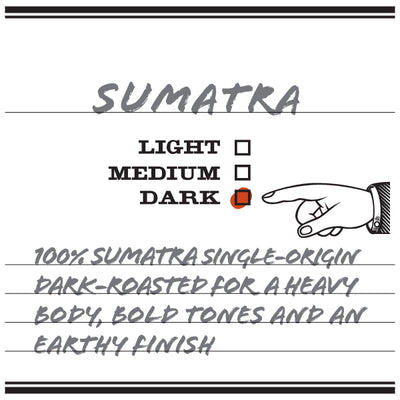
Our Sumatra is the classic example of what makes Indonesian coffee special. Thanks to a traditional processing method called wet-hulling (locally, Giling Basah), it pours a thick, almost savory cup:
- Earthy and herbal
- Cedar and warm spice
- Dark chocolate
- Heavy, full body
- Very low acidity
These are deep, rich coffees that espresso drinkers love—the opposite end of the spectrum from a bright African cup.
Other Important Coffee Producing Countries
Beyond the top five, a handful of countries punch well above their weight—several of which we're proud to roast.
Uganda has nearly doubled its output over the past decade and is Africa's leading Robusta exporter, while quietly growing more specialty Arabica too.
India grows unique shade-grown coffees and the famous Monsooned Malabar, where green beans are exposed to monsoon winds until they mellow into a low-acid, full-bodied cup unlike anything else.
Honduras has become one of Central America's largest producers and a specialty-coffee success story. Our Honduran coffee brings a sweet, balanced, lightly fruity profile that makes a beautiful medium roast.
Peru is known for organic and Fair Trade coffee grown high in the Andes—smooth, balanced, and clean. Our Peru is a customer favorite for exactly that easy-drinking quality.
El Salvador punches above its size on quality, especially with its prized Bourbon and Pacamara varieties. Our El Salvador tends toward soft, sweet, and caramel-rich.
Kenya deserves a special mention for sheer intensity. Our Kenyan coffee is bold and juicy with a blackcurrant-like brightness that filter-brew lovers chase.
China is one of the fastest-rising names in coffee, with production climbing quickly in Yunnan province. We roast a Chinese coffee that surprises people with its smooth, mild, gently sweet character.
Mexico rounds things out with mild, sweet, high-altitude Arabica from Chiapas, Veracruz, and Oaxaca—much of it organic and shade-grown.
Coffee Producing Regions: Latin America, Africa, and Asia-Pacific
You can often guess a coffee's part of the world just by tasting it. Most of the coffee we roast falls into three broad regions, and each one has a personality.
Latin American Coffee Flavor Notes
This is the comfort-food corner of the coffee world, and it's where a lot of our most popular beans come from. Coffees from Brazil, Colombia, Honduras, Peru, and El Salvador taste familiar in the best way—balanced and sweet, easy to drink black or with cream. Look for:
- Cocoa and milk chocolate
- Toasted nuts and almond
- Caramel and brown sugar
- Mild, gentle acidity
Brazil sits at the smooth, nutty, low-acid end; Colombian and Central American coffees lean a touch brighter and sweeter. If you're just starting to explore single origins, Latin America is the friendliest place to begin.
African Coffee Flavor Notes
If Latin America is comfort food, Africa is the firework show. African coffees—Ethiopia, Kenya, Uganda, Rwanda—are the ones that stop people mid-sip. Look for:
- Citrus and bergamot
- Blueberry, strawberry, and stone fruit
- Jasmine and florals
- Bright, wine-like acidity
Ethiopia headlines thanks to its native heirloom varieties, and our Kenya brings that bold, juicy brightness. These coffees shine in a pour-over, where their clarity has room to breathe.
Asian and Oceanian Coffee Flavor Notes
This region—Indonesia, Vietnam, India, Papua New Guinea, and increasingly China—makes the deep, earthy, full-bodied coffees that espresso lovers gravitate toward. Typical character:
- Earthy and herbal
- Cedar, tobacco, and warm spice
- Heavy, syrupy body
- Very low acidity
Our Sumatra is the poster child. If you like a cup that feels rich and grounding rather than bright and zippy, this is your region.
Arabica vs. Robusta: Why the Rankings Don't Match the Flavor
Here's a question we get a lot: if Brazil and Vietnam produce the most coffee, why isn't all the "best" coffee from there? The answer comes down to the two species in your cup.
| Arabica | Robusta | |
|---|---|---|
| Share of world production | ~57% | ~43% |
| Grows best at | High altitude (1,000–2,000m) | Lower altitude |
| Caffeine | Lower | Roughly double Arabica |
| Flavor | Smooth, sweet, complex, brighter | Bold, bitter, heavy-bodied |
| Typical use | Specialty, single origin, quality blends | Espresso crema, instant, commercial blends |
Production rankings are about volume, not quality. Vietnam sits at #2 in the world largely on high-yield Robusta—a hardier, cheaper, more bitter bean. That's why a country can be a giant on the production charts and still not be where specialty roasters go shopping.
We made our choice a long time ago: every Verena Street coffee is 100% Arabica, sourced from the top grades of the crop. Robusta has its place—it's what gives some espressos that thick crema—but for everyday drinking, Arabica's sweetness and range are hard to beat.
How to Choose Coffee by Origin
You don't need to memorize a world map to pick a great bag. Start with how you brew and what you like to taste.
If you drink espresso or want crema and body: Reach for Brazil, Sumatra, or a blend built around them. Low acidity and heavy body hold up under pressure and with milk.
If you brew pour-over, Chemex, or other filter methods: This is where bright, fruity coffees come alive. Ethiopian and Kenyan beans were made for it.
If you use a drip machine or French press for everyday coffee: Latin American origins—Colombia, Honduras, Peru—are forgiving, balanced, and reliably delicious.
If you love cold brew: Go full-bodied and low-acid. Brazil and Sumatra make a smooth, chocolatey cold brew that won't turn sour.
If you're not sure yet: That's the fun part. Trying coffees from different origins side by side is the fastest way to learn your own palate—and a lot cheaper than a plane ticket to all of them.
FAQs About Top Coffee Producing Countries
What country produces the most coffee in the world?
Brazil is by far the world's largest coffee producer and has held that title for over 150 years, typically growing more than a third of all coffee worldwide—around 66 million 60-kilogram bags in the 2024/25 season, according to the USDA. Brazil produces both Arabica and Robusta (locally called Conilon) and supplies a huge share of the beans used in everyday blends and espresso.
What is the Coffee Belt?
The Coffee Belt is the band of tropical land circling the globe between the Tropic of Cancer and the Tropic of Capricorn. Coffee needs warm temperatures, the right rainfall, and—for the best Arabica—high altitude, conditions found almost exclusively in this equatorial zone. Nearly every coffee-growing country sits inside it.
Why does Vietnam produce so much coffee if Robusta isn't "specialty" coffee?
Vietnam focuses on Robusta, which is hardier, higher-yielding, and easier to grow at lower altitudes than Arabica. That makes it possible to produce enormous volumes efficiently. Robusta is prized for its caffeine, crema, and bold body in espresso and instant coffee—a different goal than the delicate flavors specialty Arabica is known for.
Which country grows the best-tasting coffee?
There's no single winner—it depends on what you like. For bright, fruity, floral cups, Ethiopia and Kenya are hard to beat. For smooth, chocolatey, balanced coffee, Brazil and Colombia shine. For deep, earthy body, look to Sumatra. The best origin is the one that matches your taste and brewing method.










Leave a comment
All comments are moderated before being published.
This site is protected by hCaptcha and the hCaptcha Privacy Policy and Terms of Service apply.