
There is no separate type of espresso bean. Coffee beans are coffee beans.
The difference is not the bean itself, but how it is roasted, labeled, and used. When a bag says “espresso,” it usually means the roaster believes that coffee will work well when brewed as espresso.
So if you are wondering whether espresso beans and coffee beans are the same, the short answer is yes in a broad sense. They are not fully interchangeable in every result, but there is no sharp difference in the bean itself.
Are Espresso Beans and Coffee Beans the Same?
Yes, espresso beans and coffee beans are the same in the sense that they come from the same source.
Both are regular coffee beans, usually Arabica, Robusta, or a blend of the two. The label “espresso beans” does not mean the beans come from a different plant or represent a separate category of coffee.
In most cases, “espresso beans” simply means the coffee was roasted and marketed with espresso brewing in mind.
Are Espresso Beans and Coffee Beans Interchangeable?
Espresso beans and coffee beans are largely interchangeable.
You can use almost any coffee bean to make espresso, and you can use espresso-labeled beans for drip, pour-over, or French press. The result may taste different, but the beans themselves are not limited to one method.
In practice, the term “espresso beans” usually means the roaster expects that coffee to taste good as espresso and be easier to dial in on an espresso machine.
Brew It Right with Espresso-Ready Beans
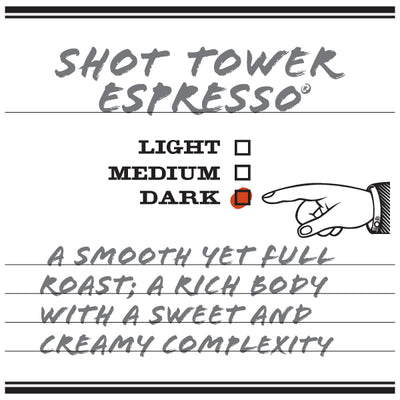
Espresso blends are crafted for balance, body, and smooth extraction under pressure. Shot Tower Espresso® is designed to deliver a rich, consistent shot every time.
 Shop Shot Tower Espresso®
Why Some Beans Are Labeled “Espresso”
Coffee is labeled as espresso because it is designed to perform well under pressure.
That usually means:
- balanced flavor
- good body
- lower acidity
- consistent extraction
In many cases, these coffees are blends and are roasted slightly darker, which makes them more forgiving in espresso machines. That is why espresso blends are often used in cafes for consistency.
However, this is not a strict rule. Some espresso coffees are medium or even light roast, especially in specialty coffee.
A Simple Way to Think About It
A useful way to understand the difference is this:
Coffee beans are like milk. Espresso beans are like milk used for lattes.
It’s the same product, but some types are chosen because they perform better for a specific use.
What Actually Matters More Than the Label
The label matters less than how the coffee is prepared.
What really affects your result is:
- grind size
- roast level
- brewing method
Espresso requires a fine grind and high pressure. That is what creates the thick, concentrated shot people expect.
Because of that, some coffees work better than others, but there is no rule that says a bean can only be used one way.
Roast Level Is Usually the Real Difference
If people are trying to draw a distinction between espresso beans and coffee beans, roast is usually what they mean.
Coffee sold for espresso is often:
- medium-dark to dark roasted
- lower in perceived acidity
- fuller-bodied
- easier to extract under pressure
Coffee sold more generally may be:
- light roast
- medium roast
- dark roast
- intended for multiple brew methods
So while espresso is not just dark roast, darker roasts are commonly associated with espresso because they tend to produce a smoother, more traditional shot.
Can Regular Coffee Beans Be Used for Espresso?
Yes, regular coffee beans can be used for espresso.
As long as the beans are fresh and ground correctly, they can be pulled as espresso. The result may taste different depending on the roast and the coffee itself, but there is nothing stopping a regular coffee bean from being brewed that way.
This is one of the clearest signs that espresso beans and coffee beans overlap so heavily. The same bean can be brewed as espresso, drip coffee, or pour-over depending on how it is used.
Can Espresso Beans Be Used for Regular Coffee?
Yes, espresso beans can also be used for regular coffee.
Because espresso beans are still just coffee beans, they can be brewed in drip machines, French press, pour-over brewers, or other methods. The main thing that changes is the flavor experience.
A darker espresso-style roast may taste heavier, stronger, or more bitter in a regular cup, especially if it was designed for milk drinks or concentrated brewing.
Grind Size Matters More Than the Label
Grind size has more practical impact than whether the bag says “espresso.”
Espresso needs a fine grind because water moves through the coffee quickly under pressure. Drip coffee usually works best with a medium grind, while French press needs a coarser grind.
That means a bag labeled “espresso” still will not perform well unless it is ground properly. In the same way, a bag labeled “coffee beans” can work well for espresso if the grind is right and the flavor profile suits the brew.
Flavor Differences: Espresso vs Regular Coffee
Espresso often tastes stronger than regular coffee, but that comes from the brewing method more than the bean label.
Espresso is usually:
- more concentrated
- thicker in texture
- more intense in flavor
Regular brewed coffee is usually:
- lighter in body
- less concentrated
- easier to sip over a longer time
A darker roast can push espresso toward chocolate, caramel, or smoky notes. A lighter roast can make espresso taste brighter, sharper, or more fruit-forward. So the final flavor depends on roast, grind, dose, and brewing method together.
What’s the Real Difference?
There isn’t a different kind of bean. Espresso beans and coffee beans are the same at their core.
“Espresso” is just a label. It usually means the coffee was roasted and blended to work well in espresso machines.
So yes, the terms are often interchangeable. But they are not identical in how they perform. Some coffees are simply better suited to espresso.







Leave a comment
All comments are moderated before being published.
This site is protected by hCaptcha and the hCaptcha Privacy Policy and Terms of Service apply.